Charging Solutions for E-Trucks and Commercial Vehicles
E-Mobility in logistics and commercial vehicle sectors
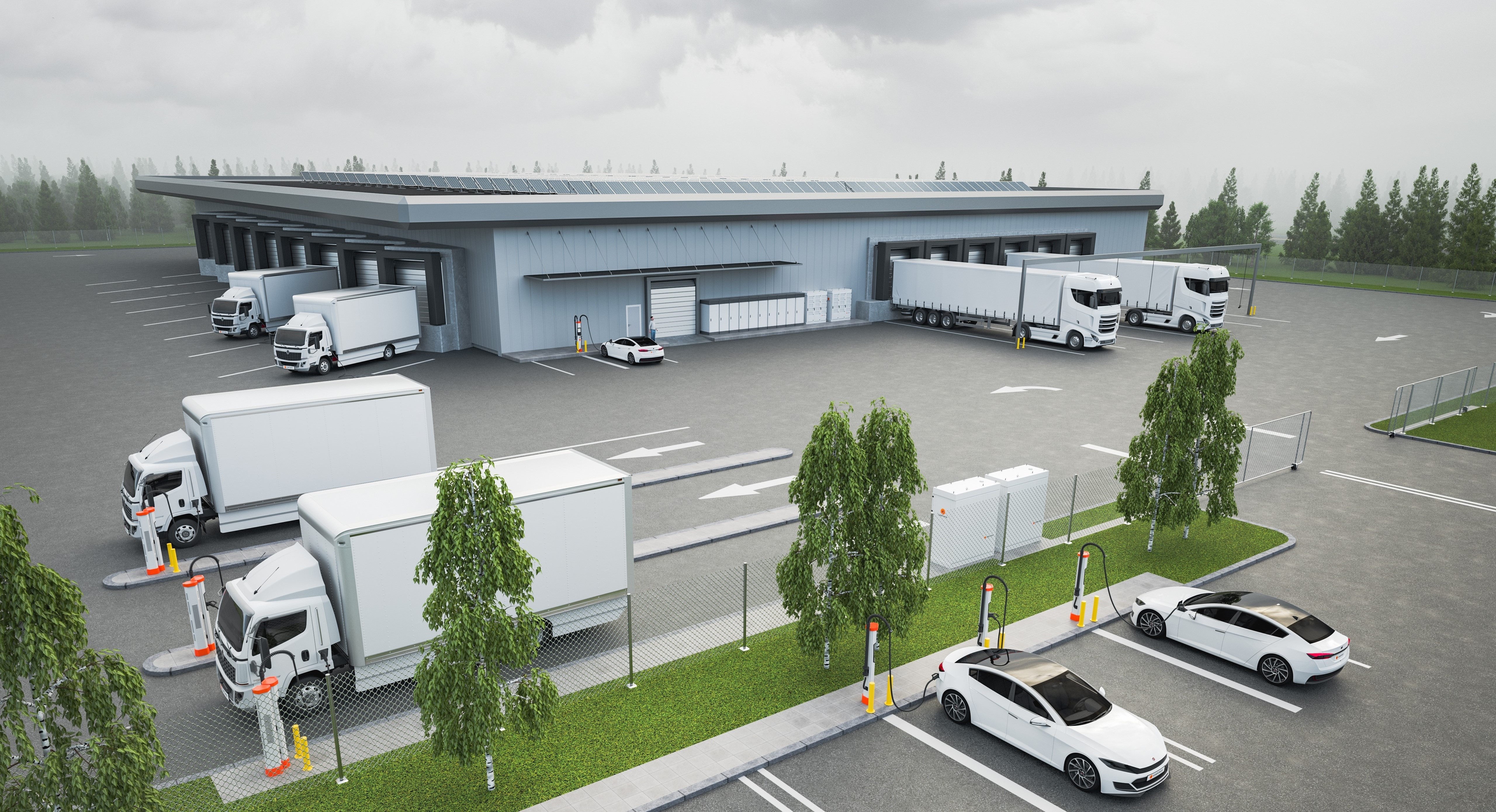
Electromobility represents an excellent alternative for heavy-duty and commercial vehicles. E-trucks are quieter, emission-free, and provide significant cost-saving potential in comparison to vehicles with combustion engines. Furthermore, electric trucks are exempt from the CO2 truck toll introduced in Germany at the end of 2023 and may benefit from government subsidies.
Discover the opportunities that e-mobility brings to your business and how modern technology contributes to lower emissions. With CONNECT's 360° offering, ranging from analysis to operation, we are the competent partner by your side. Together, we shape the sustainable future of logistics – clean, efficient, and innovative.
Together, we develop customised solutions to charge your e-truck fleet. We understand the challenges of your industry and have designed our solutions accordingly. Our concepts are tried, tested, and future-oriented.

You can rely on our extensive experience in the design of electromobility projects and decades of know-how in the energy sector. We understand the challenges in the truck industry and will find the right charging solution for you.

From consulting, planning, and construction to commissioning and beyond – we offer complete project management for turnkey solutions and support you during operation with our extensive service offerings.
Discover our range of advanced fast charging stations with power outputs of up to 600 kW, ideal for charging E-trucks and heavy-duty vehicles of all types. Our portfolio includes scalable solutions, mobile and stationary devices tailored to your needs.
Optimal planning and the integration of additional energy solutions create cost-saving opportunities. Our consulting services, tailored specifically towards the truck and commercial vehicle sector, provide you with practical advice and solutions on how to maximise your project benefits.
Our tailored consulting and decarbonisation concepts provide guidance on the technical and economic feasibility of transitioning your truck fleet. We provide you with a fundamental understanding on various technologies and asses your specific site and fleet accordingly. Along with detailed cost indications, our results provide you with valuable knowledge from which you can proceed to project planning and omplementation phases.
We professionally design and plan your project – as expert planners, we offer high-quality, specialised engineering services and guide you through the entire planning process.
Select the ideal charging solution for your needs and location from our extensive portfolio of DC charging stations and energy management solutions.
We handle the service and technical as well as commercial operations of your DC charging infrastructure at depots, yards, or truck charging stations. Our services include:
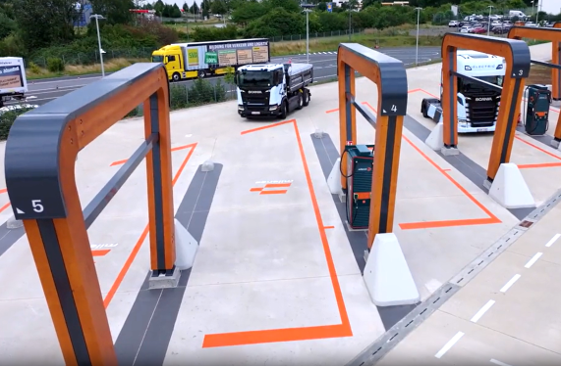

Climate-friendly transport is becoming increasingly relevant in the logistics industry and is a decisive factor for TST-Logistik in making its business future-proof and sustainable. This is why we have implemented a high-performance fast-charging infrastructure for electric lorries at the logistics company's depot in Worms.
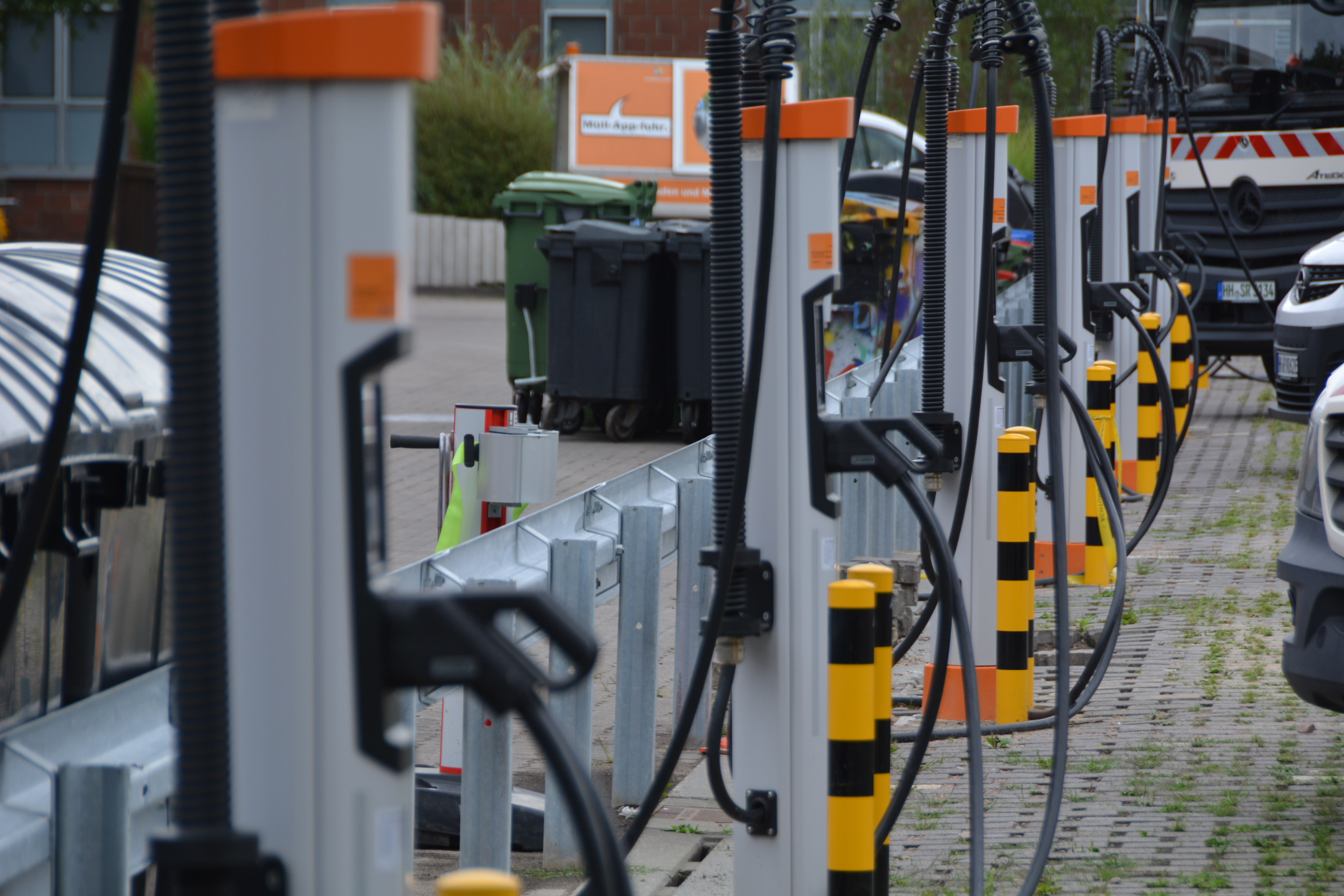
The Hamburg Stadtreinigung depot is now also a place to recharge. We have installed a comprehensive charging solution here that is designed to meet the specific requirements of commercial electric vehicles.
We would be happy to advise you on switching your truck fleet to electromobility or on charging infrastructure in the heavy commercial vehicle sector in general. Simply fill out our contact form and we will get back to you straight away. Why not also take a look at our FAQ. Here you will find useful answers to the most important questions about heavy-duty charging.
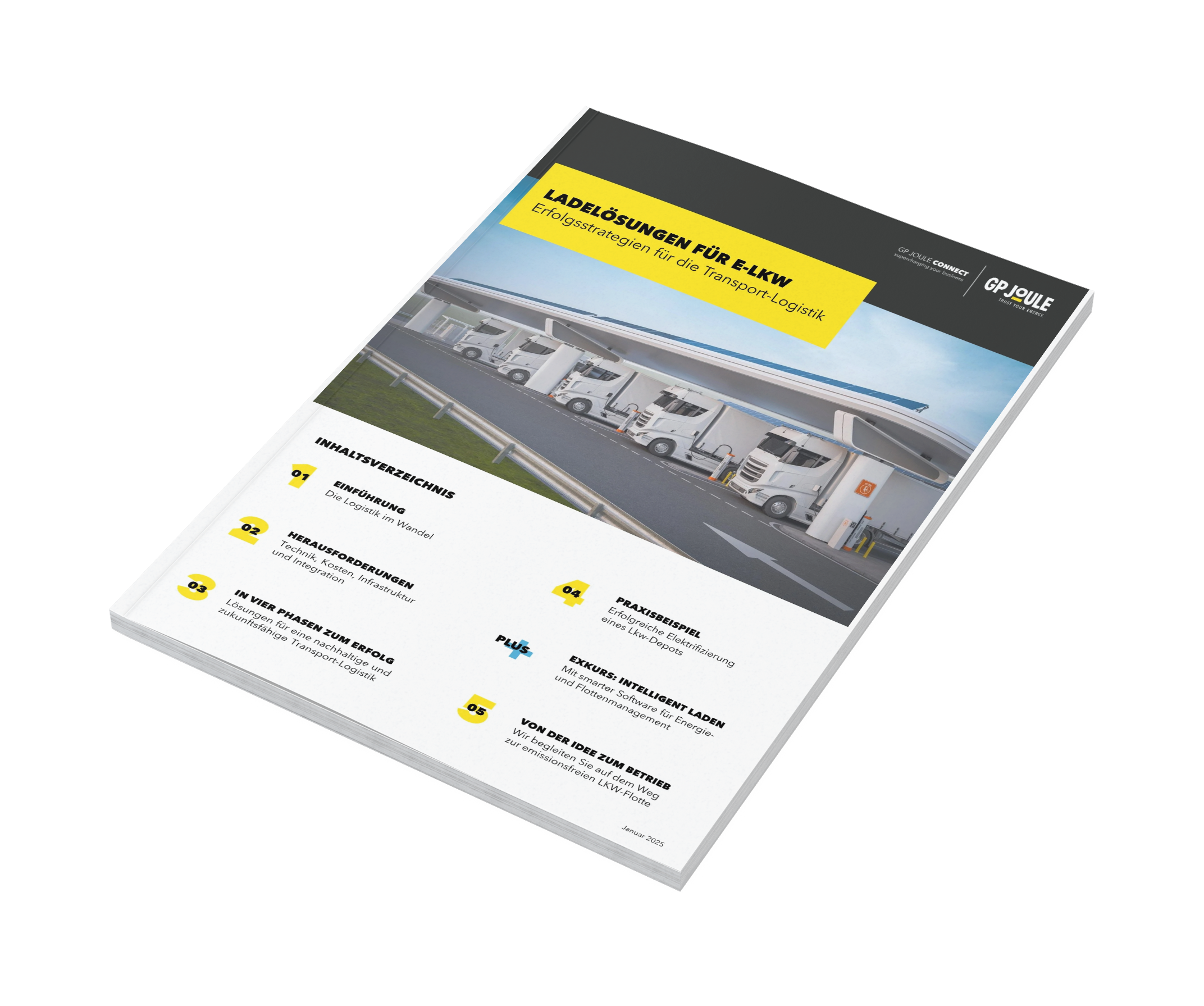
You can also find useful information in our free white paper on ‘Charging solutions for e-trucks’. We show you how to successfully make the switch to electromobility and which specific steps lead to an efficient and cost-saving e-truck fleet.